

We need your help to support people affected by Disability Hate Crimes
Here at Stop Hate we are committed to supporting the disabled community in fighting against all types of disability hate.
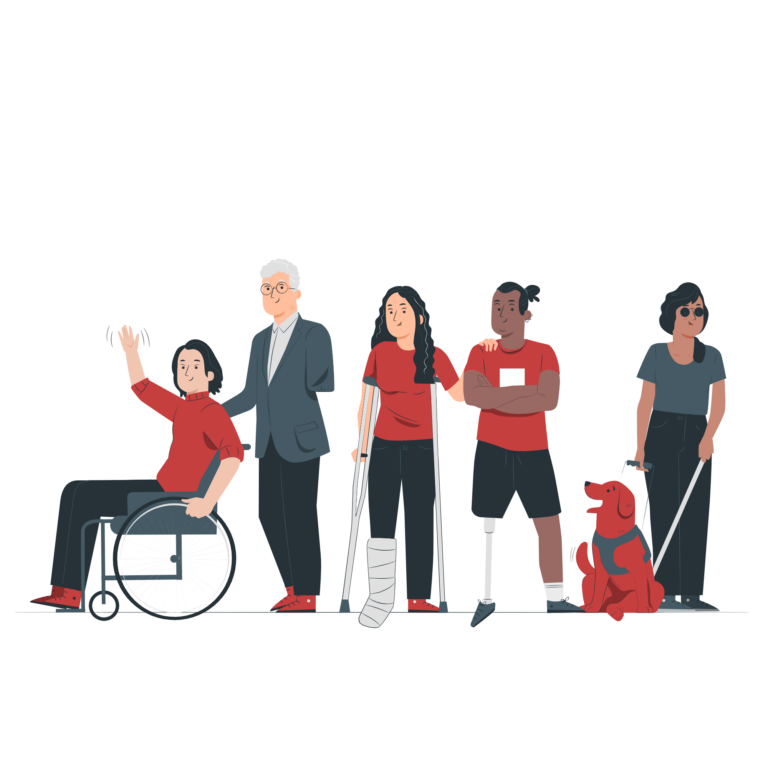
We Stand with People Affected by Disability Hate Crime
Disabled people have the right to live with dignity, independence, safety and equal opportunities. No one should face abuse, discrimination, exploitation or violence because of their disability.
Stop Hate UK supports disabled people affected by hate crime, hostility and discrimination. We listen to people affected, provide information and support, and help them explore their options for reporting incidents and accessing further assistance.
Disability hate crime can include verbal abuse, threats, physical attacks, harassment, damage to mobility aids, exploitation and other forms of targeted hostility. It can also involve repeated behaviour that humiliates, intimidates or seeks to isolate a disabled person.
Disabled people already face barriers in an environment that is not always accessible or inclusive. Disability-related hostility and discrimination can compound these barriers, restrict independence and undermine people’s ability to participate fully in society.
We are committed to challenging ableism, supporting disabled people and promoting communities where everyone is treated fairly and with respect.
What Is Ableism?
Ableism refers to prejudice, stereotypes, discrimination and practices that disadvantage disabled people or treat non-disabled ways of living as the expected standard.
It can be expressed through individual behaviour, organisational practices and wider social structures.
Examples include:
Assuming that disabled people are less capable or less independent.
Mocking someone’s impairment, communication style or support needs.
Excluding disabled people from education, employment, services or social activities.
Failing to consider reasonable adjustments or accessibility requirements.
Treating disabled people’s accounts of their experiences as less credible.
Making decisions about disabled people without listening to their views or respecting their choices.
Ableism can contribute to discrimination, social exclusion and hostility. It can also reinforce barriers that make it harder for disabled people to access opportunities and participate fully in their communities.
Challenging ableism means recognising disabled people’s rights, respecting their autonomy, addressing discriminatory practices and ensuring that accessibility and inclusion are considered from the outset.
The Impact of Disability Hate Crime
Disability hate crime can have serious consequences for individuals, families and wider communities.
People affected may experience physical injury, distress, humiliation, fear, financial loss or a loss of confidence in their surroundings. Repeated incidents can make it harder to feel safe at home, travel independently, use public spaces or participate in community life.
Disability-related hostility can also target the equipment and support people rely on. Damage to a wheelchair, mobility aid or communication device can affect a person’s independence and access to essential activities.
When disabled people experience exploitation or abuse by someone they know, the impact can include a loss of trust and disruption to important relationships.
The wider impact matters too. When disabled people are repeatedly mocked, excluded or targeted, it reinforces the message that their needs and participation matter less. This can deepen existing inequalities and discourage people from seeking support or reporting incidents.
Disabled people should not have to accept abuse as an inevitable part of everyday life. Their experiences deserve to be taken seriously, and organisations and communities have a responsibility to challenge discrimination and improve accessibility.
What Do the Hate Crime Statistics say about Disability Hate Crime?
In the year 2025/2025, 10,140 disability hate crimes were reported to the police across England and Wales. (Home Office). This represented a 5% decrease from the 10,649 offences recorded in the previous year, but it certainly should not be understood as genuine decrease in disability hate crime as we know reporting of hate crime to police by disabled people is significantly and historically low.
According to the CPS, disabled people prefer to report incidents to third party services such as helplines and charities rather than to the police.
How We Support People Affected by Hate Against the Disabled Community
A huge part of our work is to deal directly with victims of Hate Crime and to help them cope with the incident and navigate their options.
Stop Hate UK’s 24hrs helpline service provides 100% confidentiality and independent support. We provide advocacy support and independent advice.
Our callers have the autonomy to choose their way to deal with their experience. We provide our callers a safe space to tell us about their experiences and help explain the options available and provide free, independent advice. Nothing is ever too small to report to our team. We acknowledge that it can be a build up of incidents that lead to Hate Crime, and that’s why we are always on hand to listen and provide ongoing support when making a report.
Stories from callers
A caller’s young child was discriminated against because of his learning disability and refused entry into a business.
Stop Hate UK contacted the business on the parent’s behalf and followed up with the caller each week to offer support throughout the complaints process. Our helpline team also gave further amendments, feedback and advice on the parent’s complaint letter to the business.
The caller was grateful for the service Stop Hate UK provided as we understood that it is not always easy to find the time to follow up complaints when callers have children with disabilities.
Caller contacted Stop Hate Line for advice as she had discovered that ‘friends’ of her family members were making abusive comments about someone in the family behind their back because of their disability. The people passing the comments were considered to be life long friends.
Our helpline team listened carefully and was able to discuss different options with the caller, providing confirmation that this behaviour was unacceptable and possibly unlawful and provided potential methods to tackle the persons responsible.
Our work in educating communities to combat Disability Hate Crime and Discrimination
Apart from providing immediate and live support through our 24hrs Stop Hate Line, we drive change through education and communications that aim to tackle the root causes of Hate Crimes against disabled people. Disability Hate Crimes are severely underreported and raising awareness about it is crucial within and outside the disabled community.
We work strategically with a number of organisations for disabled people and are regularly in conversation with disabled people to highlight their voices, ensuring their experiences, concerns and perspectives are centred in our work to tackle disability Hate Crime.
We provide schools, communities, and businesses with bespoke training programmes that raise awareness and understanding on Disability Hate Crimes. We have developed specific training around Disability Hate Crimes which we recently carried out with the Metropolitan Police. The training programmes we develop on Disability Hate Crime is informed by our regular consultation with organisations and input from the disabled community.
We are committed to ensuring our training and services are accessible and that we provide any adjustments where needed. For example, our Hate Crime reporting services has a text relay and BSL service on the 24hr helpline so that anyone with hearing or speech difficulties is able to use our helpline.
Why Support Us
Tens of thousands are victims of Hate Crimes each year – but the effects go even wider. Being targeted by Hate Crime can not only result in physical harm but can also affect a person’s mental health and wellbeing.
Disability Hate and Ableism is one of the least reported forms of Hate Incidents and Crimes in the UK. With your collective support we can normalise and ensure that no one suffers alone when they experience or witness a Hate crime.